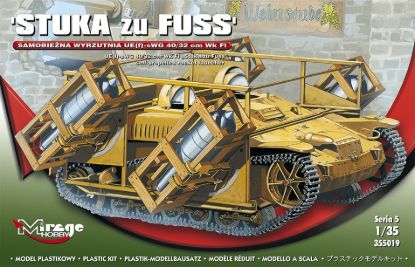
The Renault UE(f) Munitionsschlepper played a crucial role in the military operations of both France and Germany during World War II, showcasing the versatility and adaptability of military vehicles in the face of changing battlefield conditions.
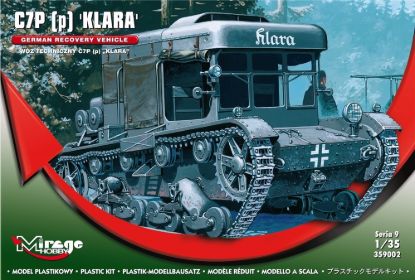
The German capture version of a C7P artillery tractor. The tactor was a significant development in the Polish military's artillery capabilities before and during World War II.
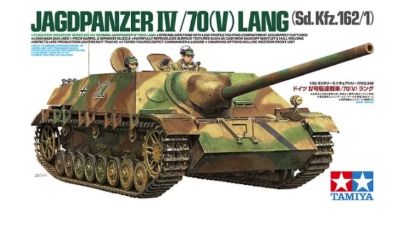
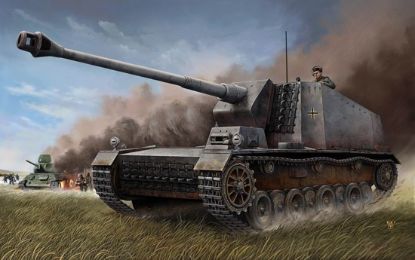
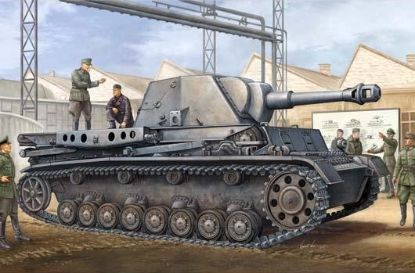
The Jagdpanzer IV / Sd.Kfz. 162, was a German tank destroyer based on the Panzer IV chassis and built in three main variants. As one of the casemate-style turretless Jagdpanzer (tank destroyer, literally "hunting tank") designs, it was developed against the wishes of Heinz Guderian, the inspector general of the Panzertruppen, as a replacement for the Sturmgeschütz III (StuG III). Guderian objected against the (in his eyes) needless diversion of resources from Panzer IV tank production, as the StuG III was still more than adequate for its role.
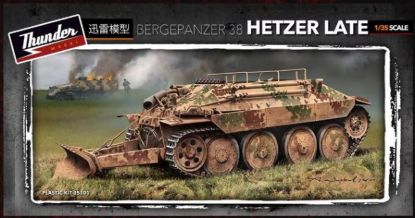
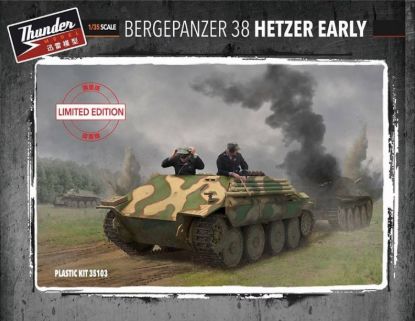
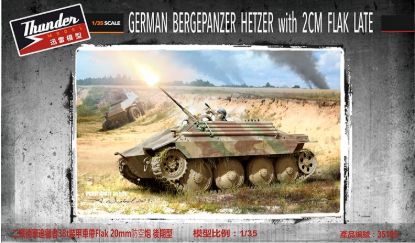
The light recovery vehicle Bergepanzer 38 or Bergepanzerwagen 38 was based on the German Jagdpanzer 38, the Hetzer tank destroyer. This light recovery vehicle, German designation Sd.Kfz. 136, was used with the Jagdpanzer units and helped repair the tank destroyers, it was capable of towing or pulling the Hetzer tanks if broken down or stuck. Between 170 to 181 were built from August 1944 until the end of the war. It used a Fug 5 radio set and was armed with a MG 34.
The light recovery vehicle Bergepanzer 38 or Bergepanzerwagen 38 was based on the German Jagdpanzer 38, the Hetzer tank destroyer. This light recovery vehicle, German designation Sd.Kfz. 136, was used with the Jagdpanzer units and helped repair the tank destroyers, it was capable of towing or pulling the Hetzer tanks if broken down or stuck. Between 170 to 181 were built from August 1944 until the end of the war. It used a Fug 5 radio set and was armed with a MG 34.
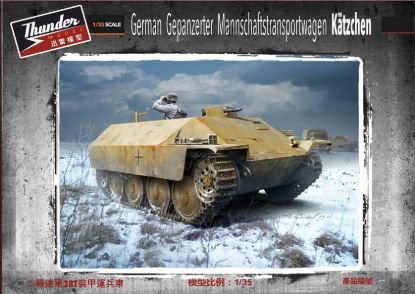
The Gepanzerter Mannschaftstransportwagen 'Kätzchen' was a prototype German armored personnel carrier developed during World War II. It was designed to transport troops with a capacity of 6-8 men and was capable of speeds exceeding 50 km/h.
The light recovery vehicle Bergepanzer 38 or Bergepanzerwagen 38 was based on the German Jagdpanzer 38, the Hetzer tank destroyer. This light recovery vehicle, German designation Sd.Kfz. 136, was used with the Jagdpanzer units and helped repair the tank destroyers, it was capable of towing or pulling the Hetzer tanks if broken down or stuck. Between 170 to 181 were built from August 1944 until the end of the war. It used a Fug 5 radio set and was armed with a MG 34.
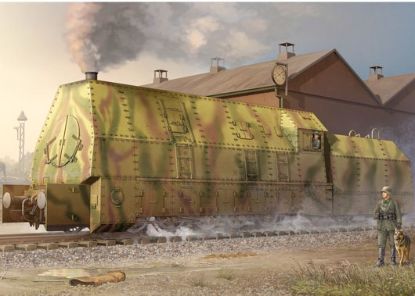
The Panzerlok BR57 was a crucial part of the German military's armored train strategy during World War II. It was designed to provide protection for the locomotive and its cargo, making it an effective tool for the Wehrmacht.
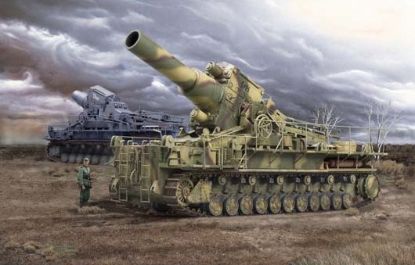
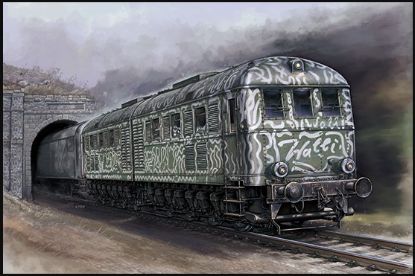
The Wehrmacht's locomotive D 311 was a significant piece of military history, particularly for its role in transporting the largest railway cannons ever built.
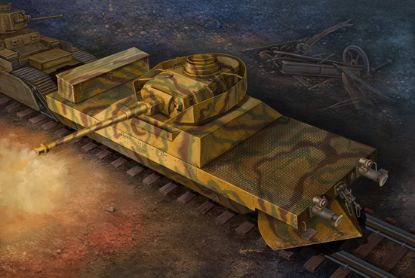
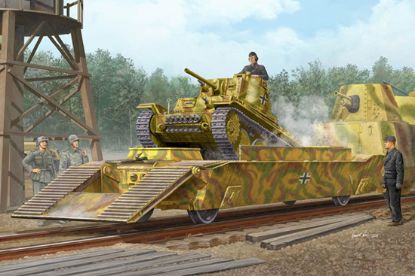
The vehicle was also called the Panzerwagen IV auf Zugwagen. To cut down any ambiguity, there was a "Panzerturm-IV auf Panzer Zugwagen" which was not only on rail, but existed as dug-in variant (panzerturm). The latter was conceived during the final battles of WW2. Generally tanks were previous items, but due to engine breakage, parts missing or just a tank being destroyed and unable to be repaired but with the hull mostly intact as the turret, it was tempting to have these buried impromptu "tank-busting" bunkers. Many were mismatch of parts typical of the "panzerturm" like an Ausf E hull with Ausf J turret. Some even received zimmerit. Panzerturm came in many places and types, but northern Italy was the most common ground for these. Low on the ground, they were a harder target to hit.
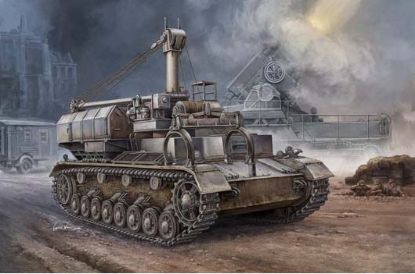
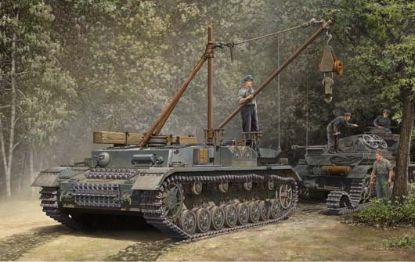
The Bergepanzer IV was a German armoured recovery vehicle developed in the 1940s based on the late Panzer IV chassis. It was designed to recover damaged tanks and was based on the Panzer IV chassis.
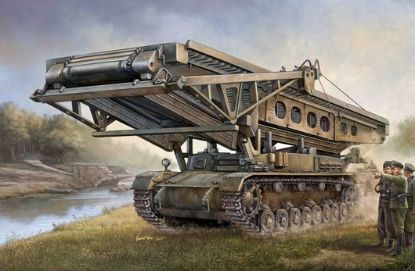
The Bruckenleger IV b was a bridge-layer mounted on the hull of the Panzer IV Ausf. D, with a total of twenty units built. These vehicles were supplied to the BL Zug (Bridging Platoon) of the 1st, 2nd, 3rd, 5th, and 10th Panzer Divisions, serving in France and the Low Countries before being withdrawn in mid-1941. The Bruckenleger IV b was known for its role in overcoming obstacles during combat, but its service with the troops was not rated well, leading to the decision to cancel further production and convert existing platforms back to conventional tanks.
The Panzer 38(t), originally designed as the Czechoslovak LT vz. 38, became a significant light tank for the German Wehrmacht during World War II, known for its reliability and adaptability.
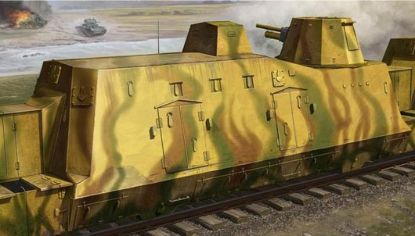
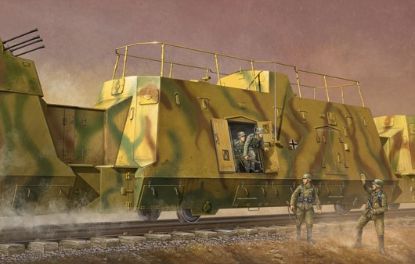
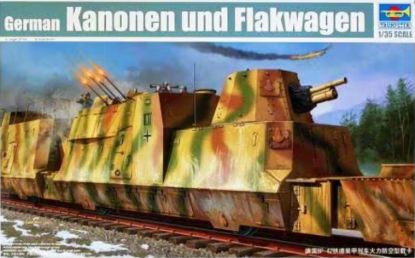
The BP42 was a significant development in the military history of Germany during World War II. It was designed to protect critical rail lines and provide mobile firepower.
The BP42 was a significant development in the military history of Germany during World War II. It was designed to protect critical rail lines and provide mobile firepower.
The BP42 was a significant development in the military history of Germany during World War II. It was designed to protect critical rail lines and provide mobile firepower.
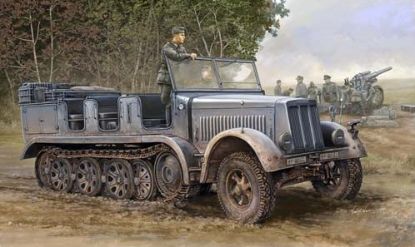
The Sd.Kfz. 7 was a half-track military vehicle used by the German Army, Luftwaffe and Waffen-SS during the Second World War. Sd.Kfz. is an abbreviation of the German word Sonderkraftfahrzeug, "special purpose vehicle". A longer designation is mittlerer Zugkraftwagen 8t, Sd.Kfz. 7, "medium towing motor vehicle 8t".