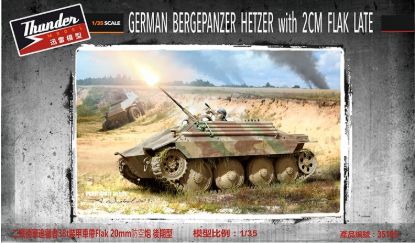
The light recovery vehicle Bergepanzer 38 or Bergepanzerwagen 38 was based on the German Jagdpanzer 38, the Hetzer tank destroyer. This light recovery vehicle, German designation Sd.Kfz. 136, was used with the Jagdpanzer units and helped repair the tank destroyers, it was capable of towing or pulling the Hetzer tanks if broken down or stuck. Between 170 to 181 were built from August 1944 until the end of the war. It used a Fug 5 radio set and was armed with a MG 34.
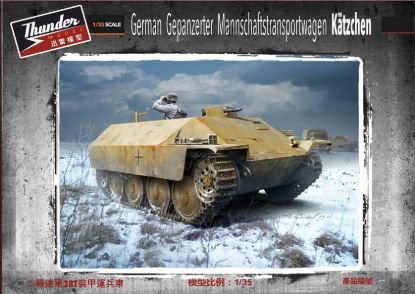
The Gepanzerter Mannschaftstransportwagen 'Kätzchen' was a prototype German armored personnel carrier developed during World War II. It was designed to transport troops with a capacity of 6-8 men and was capable of speeds exceeding 50 km/h.
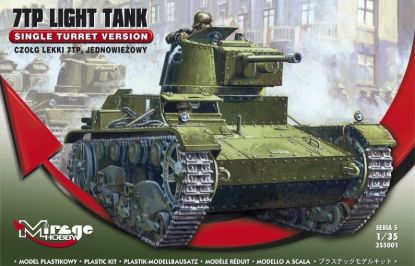
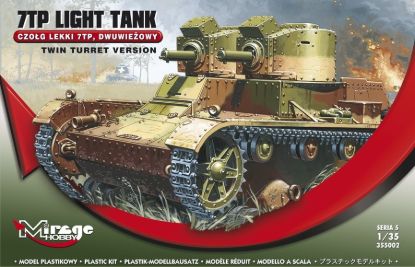
The 7TP (siedmiotonowy polski, lit. 'Polish 7-tonne') was a Polish light tank of the Second World War. It was developed from the British Vickers 6-ton. A standard tank of the Polish Army during the 1939 Polish Campaign, its production did not exceed 150 vehicles. Its chassis was used as the base for the C7P artillery tractor.
The 7TP (siedmiotonowy polski, lit. 'Polish 7-tonne') was a Polish light tank of the Second World War. It was developed from the British Vickers 6-ton. A standard tank of the Polish Army during the 1939 Polish Campaign, its production did not exceed 150 vehicles. Its chassis was used as the base for the C7P artillery tractor.
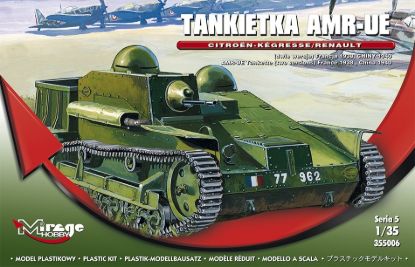
The Renault UE(f) Munitionsschlepper played a crucial role in the military operations of both France and Germany during World War II, showcasing the versatility and adaptability of military vehicles in the face of changing battlefield conditions.
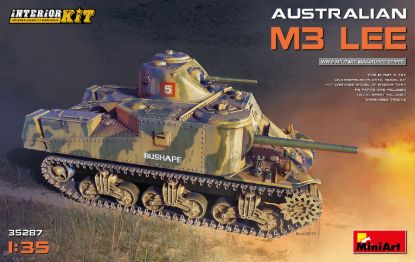
The M3 Lee, officially Medium Tank, M3, was an American medium tank used during World War II. The turret was produced in two different forms, one for US needs and one modified to British requirements to place the radio next to the commander. In British Commonwealth service, the tank was called by two names: tanks employing US-pattern turrets were called "Lee", named after Confederate general Robert E. Lee, while those with British-pattern turrets were known as "Grant", named after Union general Ulysses S. Grant.