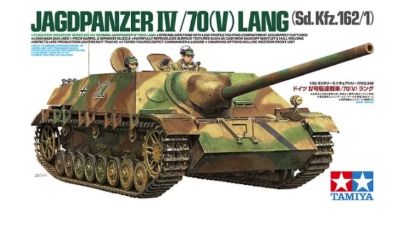
The Jagdpanzer IV / Sd.Kfz. 162, was a German tank destroyer based on the Panzer IV chassis and built in three main variants. As one of the casemate-style turretless Jagdpanzer (tank destroyer, literally "hunting tank") designs, it was developed against the wishes of Heinz Guderian, the inspector general of the Panzertruppen, as a replacement for the Sturmgeschütz III (StuG III). Guderian objected against the (in his eyes) needless diversion of resources from Panzer IV tank production, as the StuG III was still more than adequate for its role.
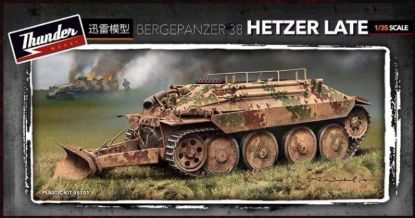
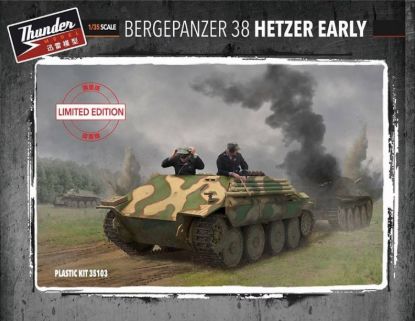
The light recovery vehicle Bergepanzer 38 or Bergepanzerwagen 38 was based on the German Jagdpanzer 38, the Hetzer tank destroyer. This light recovery vehicle, German designation Sd.Kfz. 136, was used with the Jagdpanzer units and helped repair the tank destroyers, it was capable of towing or pulling the Hetzer tanks if broken down or stuck. Between 170 to 181 were built from August 1944 until the end of the war. It used a Fug 5 radio set and was armed with a MG 34.
The light recovery vehicle Bergepanzer 38 or Bergepanzerwagen 38 was based on the German Jagdpanzer 38, the Hetzer tank destroyer. This light recovery vehicle, German designation Sd.Kfz. 136, was used with the Jagdpanzer units and helped repair the tank destroyers, it was capable of towing or pulling the Hetzer tanks if broken down or stuck. Between 170 to 181 were built from August 1944 until the end of the war. It used a Fug 5 radio set and was armed with a MG 34.
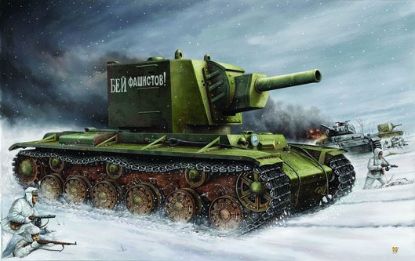
The KV-2, also known as the Kliment Voroshilov heavy tank, was developed during World War II as a heavy tank designed to provide heavy firepower and strong armor support for infantry and other tanks.
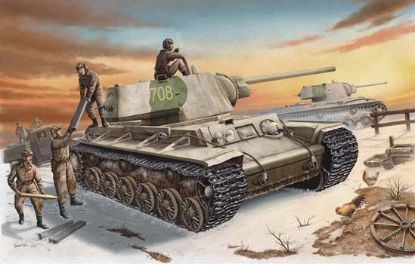
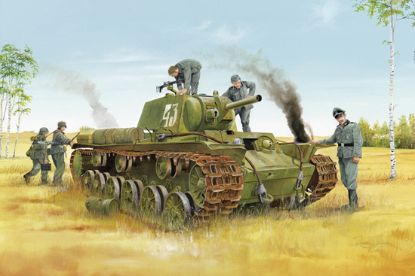
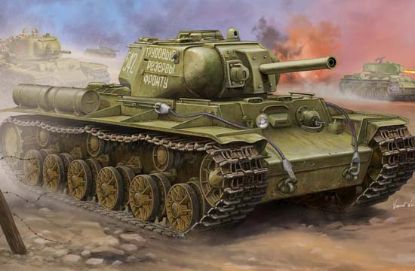
KV-8 built on a KV-1 Model 1942 hull with the angular rear hull overhang, and mounting a 45mm gun and ATO-41 flame projector in an up-armored welded turret. The KV-8 and KV-8S (based on the KV-1S tank) were used by Russians in all fronts of WWII.
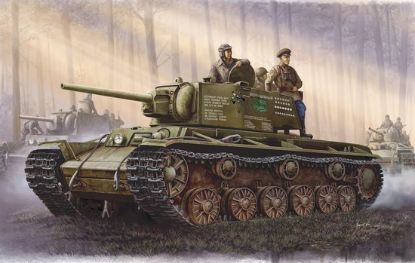
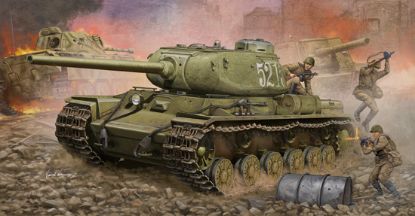
The KV-85 heavy tank was not an epochal machine in the history of Russian tank design and construction. Although it was not produced in the thousands, this tank still made a contribution to the victory over fascism.
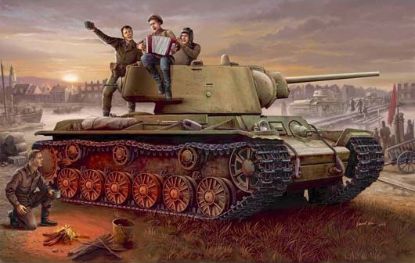
The development of the KV-122 was driven by the evolution of threats on the Eastern Front: after the Battle of Kursk, German tank divisions received King Tigers with frontal armor up to 180 mm thick, making the KV-85's 85 mm guns ineffective at ranges beyond 500 meters.
KV-8 built on a KV-1 Model 1942 hull with the angular rear hull overhang, and mounting a 45mm gun and ATO-41 flame projector in an up-armored welded turret. The KV-8 and KV-8S (based on the KV-1S tank) were used by Russians in all fronts of WWII.
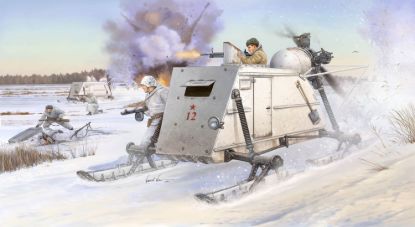
The NKL-26 was an armoured aerosan used by the Soviet Union during World War II. It was based on the earlier NKL-6 and was made of plywood with a ten-millimetre armor plate on the front only. The vehicle was armed with a 7.62mm DT machine gun in a ring mount and powered by an M-11G aircraft engine.
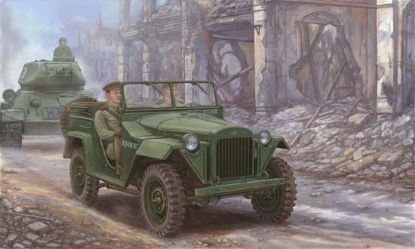
The GAZ-67 and GAZ-67B were integral to the Soviet military's operations during World War II. They were used by the Red Army and played a significant role in the Korean War and the Indochina War.
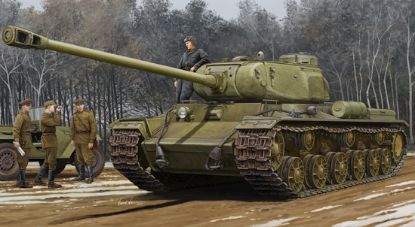
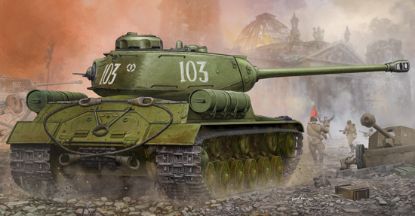
The JS-2's military history is marked by its effectiveness in combat against German Panther tanks, showcasing its capabilities and the legacy it left behind. Its design and performance set a precedent for Soviet tank development doctrine for decades to come.
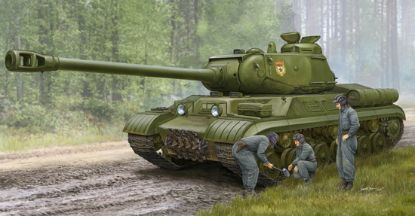
In 1957 the Soviets upgraded the pre-existing IS-2 tanks (although received IS-2M index only in 1960) with new hull sides with integrated stowage boxes, T-10M tracks and roadwheels, machine gun in turret rear replaced by ventilation fan and many other minor technical improvements.
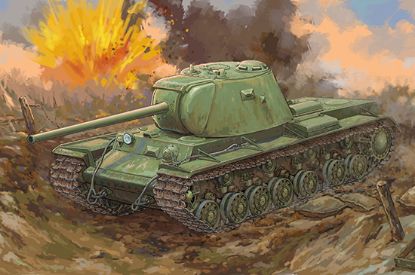
The KV-3 (Object 223) was an experimental Soviet heavy tank developed in 1941, based on the KV-220. It was designed to improve armor protection and firepower to counter new threats, including German tanks and anti-tank guns.
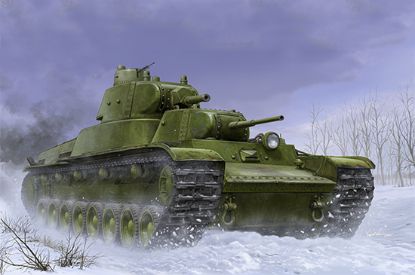
The T-100 tank was a Soviet heavy tank prototype designed in 1938-39 as a potential replacement for the T-35. It was developed by the OKMO design team at the S.M. Kirov Factory No. 185 in Leningrad.
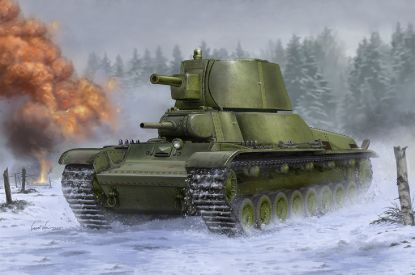
The T-100Z tank, also known as the SU-100Y, was a self-propelled gun was a twin-turreted Soviet heavy tank designed in 1938-39, intended to replace the aging T-35 tank. The SU-100Y was used in the defense of Moscow in 1941.
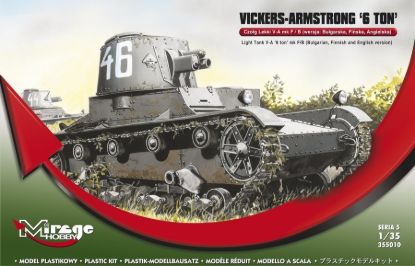

![Picture of Vickers-ARMSTRONG VA mk F/45 Light Tank [late single turret version with a 45 Psv.K/38 tank-gun]](https://www.afvhobbyhub.com/images/thumbs/0023115_vickers-armstrong-va-mk-f45-light-tank-late-single-turret-version-with-a-45-psvk38-tank-gun_415.jpeg "Show details for Vickers-ARMSTRONG VA mk F/45 Light Tank [late single turret version with a 45 Psv.K/38 tank-gun]")