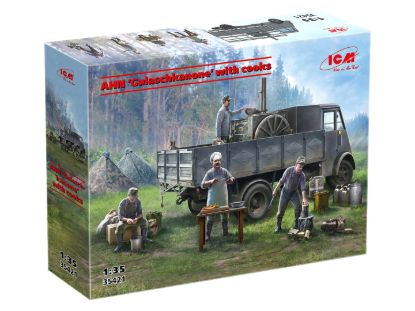
The AHN 'Gulaschkanone' was a significant part of the Wehrmacht's military history, playing a crucial role in sustaining the army's strength and morale during World War II. The field kitchens were essential for providing soldiers with hot meals, and their design and functionality were adapted to the needs of the German army. The Gulaschkanone, with its chimney resembling a cannon barrel, was a symbol of the average German soldier's life at the front. The kitchens were used in various forms, including horse-drawn and motorized, and were equipped with different cauldrons and storage compartments. The AHN 'Gulaschkanone' was a testament to the German army's commitment to providing food and comfort to its soldiers, even in the most austere conditions.
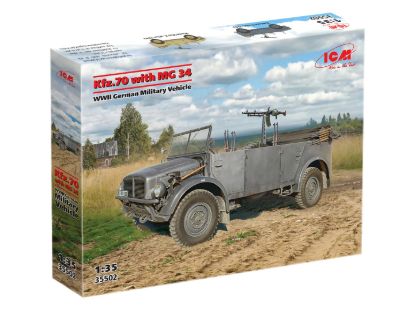
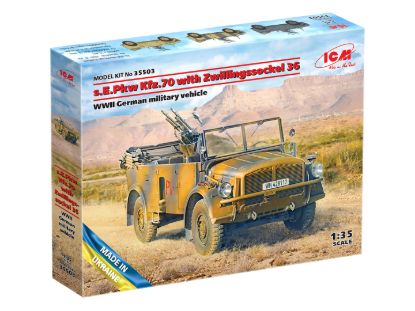
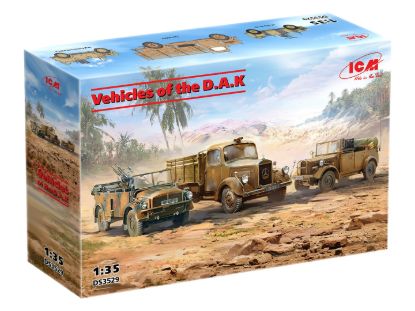
The Krupp Protze (Kfz.70 - Standard configuration for personnel carrying) was a six-wheeled 6×4 German truck and artillery tractor produced between 1934 and 1941 and heavily used in World War II. It was powered by a 4-cylinder, 55 hp or, from 1936, 60 hp Krupp M 304 petrol engine. Its main purpose was to tow artillery, especially the 3.7 cm Pak 36 anti-tank gun (designated Kfz 69), and transport motorized infantry (designated Kfz 70).
The Krupp Protze (Kfz.70 - Standard configuration for personnel carrying) was a six-wheeled 6×4 German truck and artillery tractor produced between 1934 and 1941 and heavily used in World War II. It was powered by a 4-cylinder, 55 hp or, from 1936, 60 hp Krupp M 304 petrol engine. Its main purpose was to tow artillery, especially the 3.7 cm Pak 36 anti-tank gun (designated Kfz 69), and transport motorized infantry (designated Kfz 70).
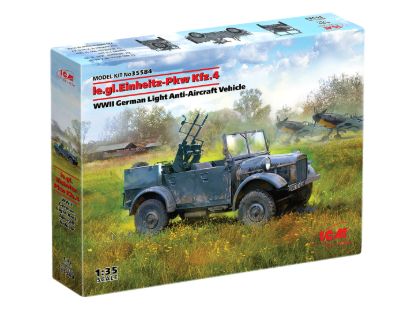
The Kfz 4 Einheits-Pkw were used by repair-and-maintenance squads (Kfz. 2/40), also known as the Einheits-PKW, was a 4x4 light truck used by Germany during World War II.
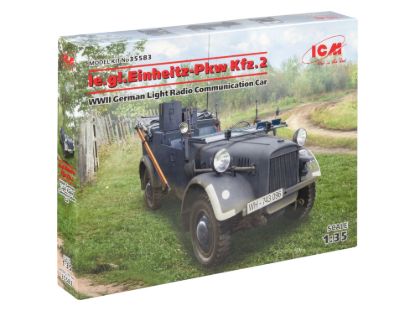
The Kfz 2 Einheits-Pkw were used as troop-level aerial defence (Kfz. 4), also known as the Einheits-PKW, was a 4x4 light truck used by Germany during World War II.
The GAZ AA truck played a crucial role in the Soviet military during the 1930s and World War II. It was the backbone of Soviet civilian and military logistics, serving in both army and national economy.
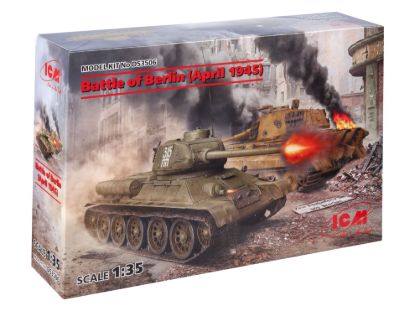
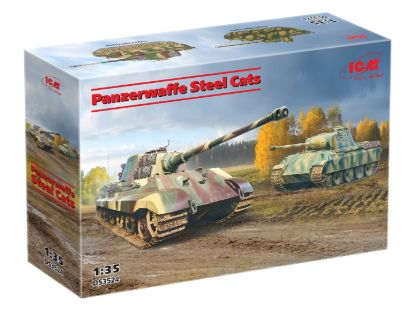
The set includes 225 parts for assembly of T-34-85 Soviet medium tank and 264 parts for assembly of Pz.Kpfw.VI King Tiger (late production) German heavy tank model kits.
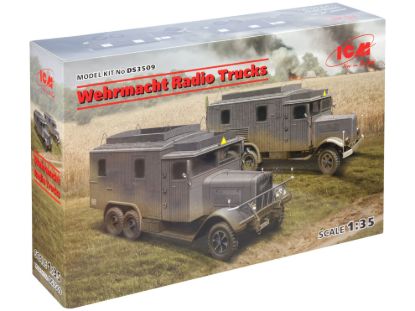
Henschel 33D1 Kfz.72, Krupp L3H163 Kfz.72 Wehrmacht Radio Trucks (radio operation, teletype, telephone operation, radio listening, weather and printing car)
The set includes 319 parts for assembly of Henschel 33D1 Kfz.72 and 306 parts for assembly of Krupp L3H163 Kfz.72 WWII German radio trucks model kits.
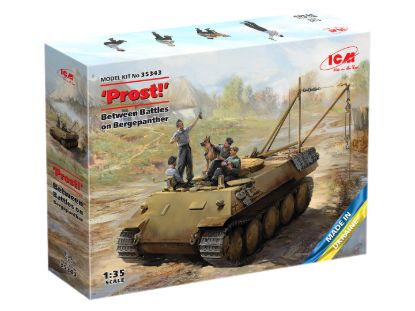
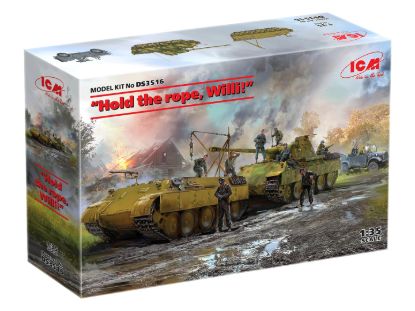
The Diorama set includes a Pz,Kpfw. V Ausf. D (Panther), a Bergepanther recovery vehicle and a Kfz.4 with AA-guns along with German tank crew and drivers.
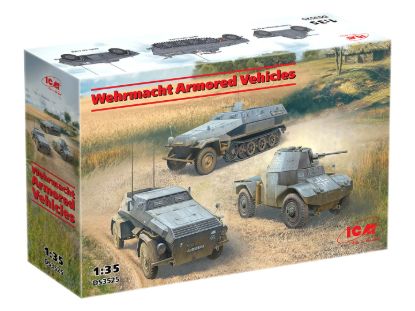
The Sd.Kfz. 251/1, also known as the mittlere Schützenpanzerwagen (IR) Falke, was the standard German personnel carrier and a significant vehicle in the military history of World War II. It was designed to transport a squad of Panzergrenadiers to the battlefield, providing protection from small arms fire and artillery shrapnel. The vehicle was armed with two MG34 or MG42 machine guns for defense and direct support. The Sd.Kfz. 251/1 was used extensively by Nazi Germany during the war, particularly on the Eastern front, and later in the Western front.
Vehicles of the D.A.K includes the Mercedes-Benz L3000S, The Krupp Protze (Kfz.70) Anti-Aircraft Vehicle, and the Einheits-Pkw ( Kfz.2) Radio Communication Car. These vehicles were used by Germany in every theater of service during World War II.