MiniArtManufacturers Highly Detailed Plastic Model Kits in Ukraine. We are proud to carry their WW II Military Miniatures, Vehicles, Diorama Accessories and Historical Figures.
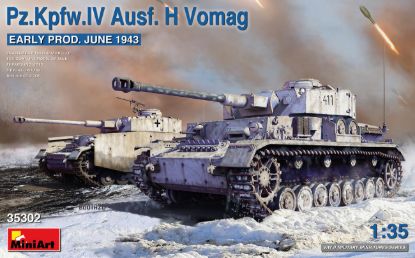
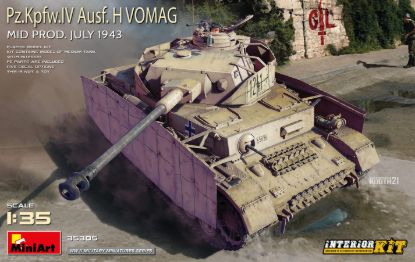
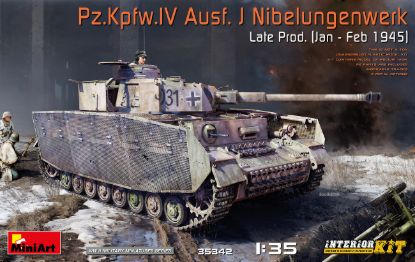
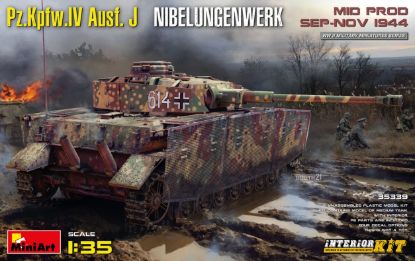
The Sd.Kfz. 161, also known as the Panzer IV, was a medium tank developed in Nazi Germany in the late 1930s and used extensively during World War II as well as later wars. It was the most numerous German tank and the second-most numerous German fully tracked armored fighting vehicle of the war, with 8,553 units produced. The Panzer IV was initially designed for infantry support but evolved to become the primary tank for German forces due to its ability to engage enemy armor effectively. It was the only German tank to remain in continuous production throughout the war, with over 8,800 units produced between 1936 and 1945.
The Sd.Kfz. 161, also known as the Panzer IV, was a medium tank developed in Nazi Germany in the late 1930s and used extensively during World War II as well as later wars. It was the most numerous German tank and the second-most numerous German fully tracked armored fighting vehicle of the war, with 8,553 units produced. The Panzer IV was initially designed for infantry support but evolved to become the primary tank for German forces due to its ability to engage enemy armor effectively. It was the only German tank to remain in continuous production throughout the war, with over 8,800 units produced between 1936 and 1945.
The Panzer IV was originally intended to be used only on a limited scale, so initially Krupp was its sole manufacturer. Prior to the Polish campaign, only 217 Panzer IVs had been produced: 35 Ausf. A; 42 Ausf. B; and 140 Ausf. C; in 1941, production was extended to Vogtländische Maschinenfabrik ("VOMAG") (located in the city of Plauen) and the Nibelungenwerk in the Austrian city of St. Valentin.
The Panzer IV was originally intended to be used only on a limited scale, so initially Krupp was its sole manufacturer. Prior to the Polish campaign, only 217 Panzer IVs had been produced: 35 Ausf. A; 42 Ausf. B; and 140 Ausf. C; in 1941, production was extended to Vogtländische Maschinenfabrik ("VOMAG") (located in the city of Plauen) and the Nibelungenwerk in the Austrian city of St. Valentin.
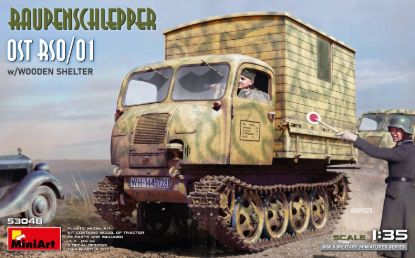
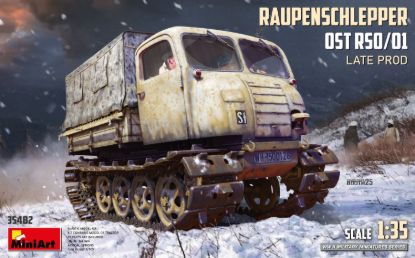
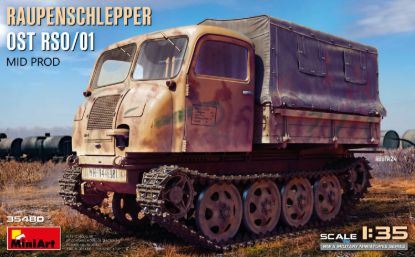
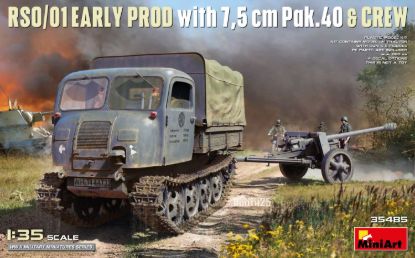
The Raupenschlepper Ost (RSO) was a fully tracked, lightweight vehicle developed by Germany during World War II. It was designed to address the mobility challenges faced by wheeled and half-tracked vehicles in the mud and snow of the Eastern Front. The RSO was a simple, robust, and lightweight tractor primarily used to tow light to medium artillery and for general transport of supplies and personnel. Its all-steel tracks and high ground clearance provided superior mobility in challenging terrain, making it an indispensable workhorse for German logistics in the East from 1942 until the end of the war.
The Raupenschlepper Ost (RSO) was a fully tracked, lightweight vehicle developed by Germany during World War II. It was designed to address the mobility challenges faced by wheeled and half-tracked vehicles in the mud and snow of the Eastern Front. The RSO was a simple, robust, and lightweight tractor primarily used to tow light to medium artillery and for general transport of supplies and personnel. Its all-steel tracks and high ground clearance provided superior mobility in challenging terrain, making it an indispensable workhorse for German logistics in the East from 1942 until the end of the war.
The Raupenschlepper Ost (RSO) was a fully tracked, lightweight vehicle developed by Germany during World War II. It was designed to address the mobility challenges faced by wheeled and half-tracked vehicles in the mud and snow of the Eastern Front. The RSO was a simple, robust, and lightweight tractor primarily used to tow light to medium artillery and for general transport of supplies and personnel. Its all-steel tracks and high ground clearance provided superior mobility in challenging terrain, making it an indispensable workhorse for German logistics in the East from 1942 until the end of the war.
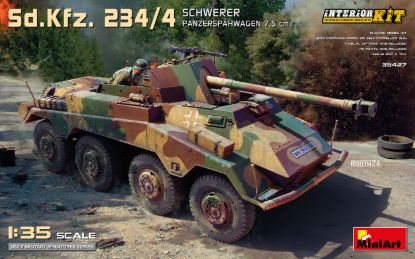
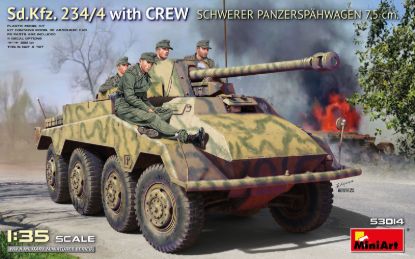
The SdKfz 234 Puma was a German eight-wheeled heavy armored car developed during World War II. After it was clear that a stronger armament was necessary to fight the Soviet tank units, the SdKfz 234/3 with a short 7.5 cm gun and then the SdKfz 234/4 with a long 7.5 cm Pak 40, which were rigidly mounted to the front in an open top stand, appeared. The Puma was primarily designed for reconnaissance missions, but its firepower (especially in the 234/2 variant) made it capable of engaging enemy light armor. Its excellent mobility and range allowed it to operate effectively behind enemy lines. The SdKfz 234 series represented the pinnacle of German armored car design during WWII, combining mobility, firepower, and reasonable protection. The diesel engine provided superior range compared to most contemporary vehicles.
The SdKfz 234 Puma was a German eight-wheeled heavy armored car developed during World War II. After it was clear that a stronger armament was necessary to fight the Soviet tank units, the SdKfz 234/3 with a short 7.5 cm gun and then the SdKfz 234/4 with a long 7.5 cm Pak 40, which were rigidly mounted to the front in an open top stand, appeared. The Puma was primarily designed for reconnaissance missions, but its firepower (especially in the 234/2 variant) made it capable of engaging enemy light armor. Its excellent mobility and range allowed it to operate effectively behind enemy lines. The SdKfz 234 series represented the pinnacle of German armored car design during WWII, combining mobility, firepower, and reasonable protection. The diesel engine provided superior range compared to most contemporary vehicles.
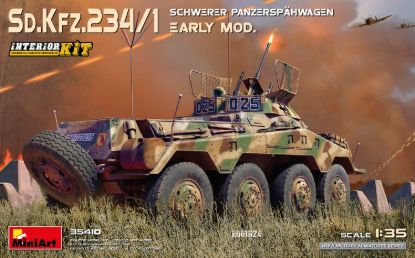
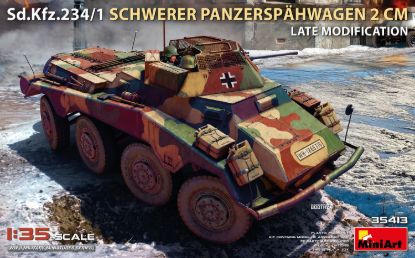
The SdKfz 234 Puma was a German eight-wheeled heavy armored car developed during World War II. The basic model was the command armored car SdKfz 234/1 with an open top, fully rotatable hexagonal turret with 2 cm quick-fire cannon. The Puma was primarily designed for reconnaissance missions, but its firepower (especially in the 234/2 variant) made it capable of engaging enemy light armor. Its excellent mobility and range allowed it to operate effectively behind enemy lines. The SdKfz 234 series represented the pinnacle of German armored car design during WWII, combining mobility, firepower, and reasonable protection. The diesel engine provided superior range compared to most contemporary vehicles.
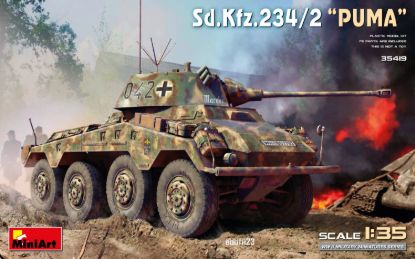
The SdKfz 234 Puma was a German eight-wheeled heavy armored car developed during World War II. The Puma was the SdKfz 234/2 with a turret shaped like a horse’s hoof from above with 5-cm-cannon was originally developed for the never put into service light main battle tank Leopard. The Puma was primarily designed for reconnaissance missions, but its firepower (especially in the 234/2 variant) made it capable of engaging enemy light armor. Its excellent mobility and range allowed it to operate effectively behind enemy lines. The SdKfz 234 series represented the pinnacle of German armored car design during WWII, combining mobility, firepower, and reasonable protection. The diesel engine provided superior range compared to most contemporary vehicles.