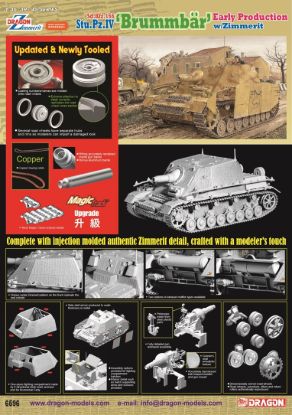
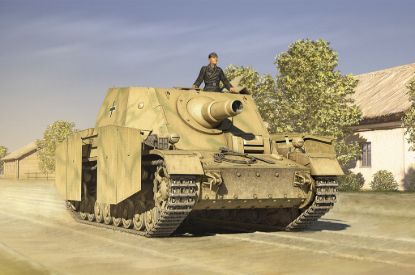
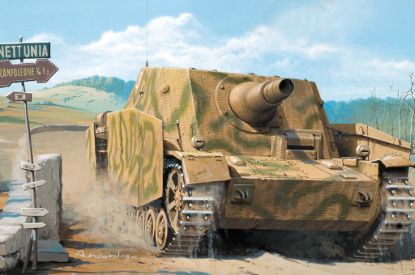
The Sturmpanzer (also known as Sturmpanzer 43 or Sd.Kfz. 166) is a German armoured infantry support gun based on the Panzer IV chassis used in the Second World War. It was used at the Battles of Kursk, Anzio, Normandy, and was deployed in the Warsaw Uprising. It was known by the nickname Brummbär (German: "Grouch")[Note 1] by Allied intelligence, a name which was not used by the Germans. German soldiers nicknamed it the "Stupa", a contraction of the term Sturmpanzer. Just over 300 vehicles were built and they were assigned to four independent battalions.
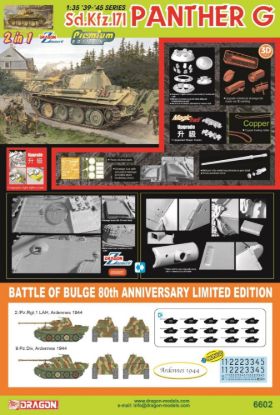
The Panther tank, officially Panzerkampfwagen V Panther (abbreviated Pz.Kpfw. V) with ordnance inventory designation: Sd.Kfz. 171, is a German medium tank of World War II. It was used in most European theatres of World War II from mid-1943 to the end of the war in May 1945.
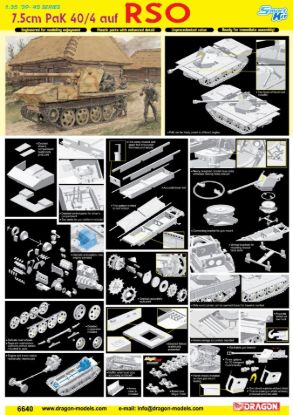
As the German army faced ever increasing numbers of Allied armour, more ways were found to place anti-tank weaponry on already existing chassis, in order to try and counter the Allied numerical superiority. The Raupenschlepper Ost (RSO) was no exception to the armed conversions that were built upon so many German vehicles at the time. The decision was made in 1943 to take the well proven battle tractor and place a Pak 40/4 on its back, in order to provide more mobile anti-tank capabilities on the front line.
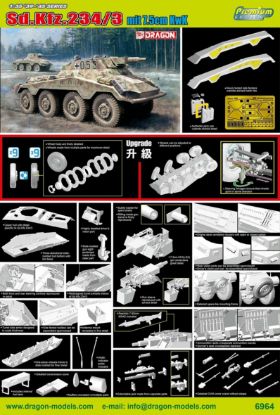
The SdKfz 234 Puma was a German eight-wheeled heavy armored car developed during World War II. After it was clear that a stronger armament was necessary to fight the Soviet tank units, the SdKfz 234/3 with a short 7.5 cm gun and then the SdKfz 234/4 with a long 7.5 cm Pak 40, which were rigidly mounted to the front in an open top stand, appeared. The Puma was primarily designed for reconnaissance missions, but its firepower (especially in the 234/2 variant) made it capable of engaging enemy light armor. Its excellent mobility and range allowed it to operate effectively behind enemy lines. The SdKfz 234 series represented the pinnacle of German armored car design during WWII, combining mobility, firepower, and reasonable protection. The diesel engine provided superior range compared to most contemporary vehicles.
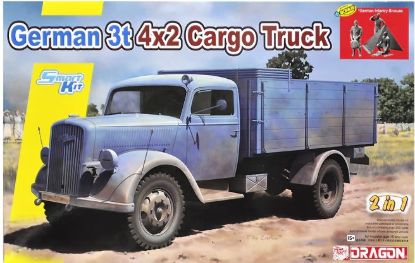
Opel Blitz (Blitz being German for "lightning") was the name given to various light and middleweight trucks built by the German Opel automobile manufacturer between 1930 and 1975.
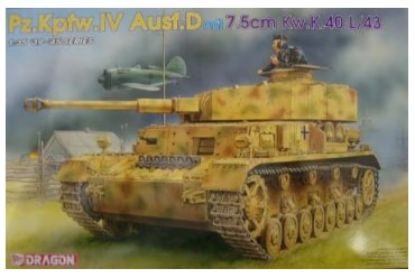
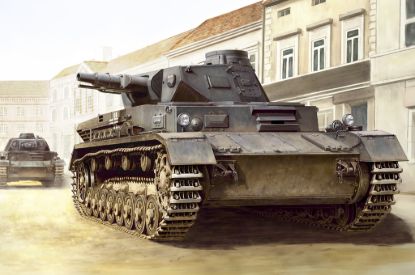
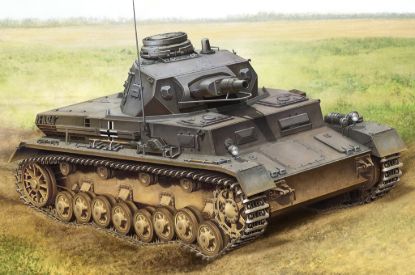
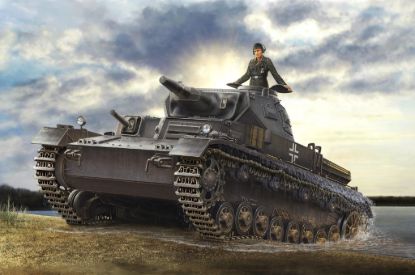
The Panzer IV was originally intended to be used only on a limited scale, so initially Krupp was its sole manufacturer. Prior to the Polish campaign, only 217 Panzer IVs had been produced: 35 Ausf. A; 42 Ausf. B; and 140 Ausf. C; in 1941, production was extended to Vogtländische Maschinenfabrik ("VOMAG") (located in the city of Plauen) and the Nibelungenwerk in the Austrian city of St. Valentin.
The Panzer IV was originally intended to be used only on a limited scale, so initially Krupp was its sole manufacturer. Prior to the Polish campaign, only 217 Panzer IVs had been produced: 35 Ausf. A; 42 Ausf. B; and 140 Ausf. C; in 1941, production was extended to Vogtländische Maschinenfabrik ("VOMAG") (located in the city of Plauen) and the Nibelungenwerk in the Austrian city of St. Valentin.
The Panzer IV was originally intended to be used only on a limited scale, so initially Krupp was its sole manufacturer. Prior to the Polish campaign, only 217 Panzer IVs had been produced: 35 Ausf. A; 42 Ausf. B; and 140 Ausf. C; in 1941, production was extended to Vogtländische Maschinenfabrik ("VOMAG") (located in the city of Plauen) and the Nibelungenwerk in the Austrian city of St. Valentin.
The Sturmpanzer (also known as Sturmpanzer 43 or Sd.Kfz. 166) is a German armoured infantry support gun based on the Panzer IV chassis used in the Second World War. It was used at the Battles of Kursk, Anzio, Normandy, and was deployed in the Warsaw Uprising. It was known by the nickname Brummbär (German: "Grouch")[Note 1] by Allied intelligence, a name which was not used by the Germans. German soldiers nicknamed it the "Stupa", a contraction of the term Sturmpanzer. Just over 300 vehicles were built and they were assigned to four independent battalions.
The Sturmpanzer (also known as Sturmpanzer 43 or Sd.Kfz. 166) is a German armoured infantry support gun based on the Panzer IV chassis used in the Second World War. It was used at the Battles of Kursk, Anzio, Normandy, and was deployed in the Warsaw Uprising. It was known by the nickname Brummbär (German: "Grouch")[Note 1] by Allied intelligence, a name which was not used by the Germans. German soldiers nicknamed it the "Stupa", a contraction of the term Sturmpanzer. Just over 300 vehicles were built and they were assigned to four independent battalions.
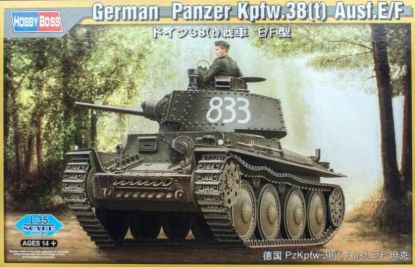
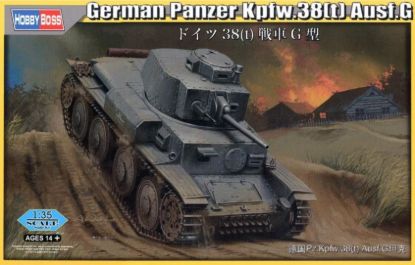
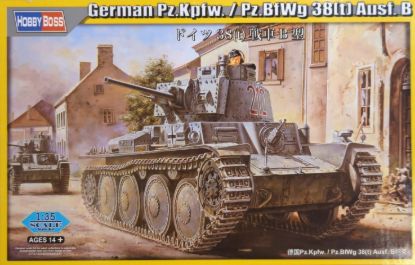
The Panzerkampfwagen 38(t), originally known as the Českomoravská Kolben-Daněk (ČKD) LT vz. 38, was a tank designed during the 1930s, which saw extensive service during World War II. Developed in Czechoslovakia by ČKD, the type was adopted by Nazi Germany following the German occupation of Czechoslovakia. With the German Army and other Axis forces, the type saw service in the invasions of Poland, France and the USSR.
The Panzerkampfwagen 38(t), originally known as the Českomoravská Kolben-Daněk (ČKD) LT vz. 38, was a tank designed during the 1930s, which saw extensive service during World War II. Developed in Czechoslovakia by ČKD, the type was adopted by Nazi Germany following the German occupation of Czechoslovakia. With the German Army and other Axis forces, the type saw service in the invasions of Poland, France and the USSR.
The Panzerkampfwagen 38(t), originally known as the Českomoravská Kolben-Daněk (ČKD) LT vz. 38, was a tank designed during the 1930s, which saw extensive service during World War II. Developed in Czechoslovakia by ČKD, the type was adopted by Nazi Germany following the German occupation of Czechoslovakia. With the German Army and other Axis forces, the type saw service in the invasions of Poland, France and the USSR.
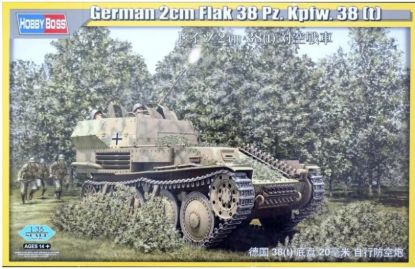
The Flakpanzer 38(t), officially named Flakpanzer 38(t) auf Selbstfahrlafette 38(t) Ausf M (Sd.Kfz. 140), was a German self-propelled anti-aircraft gun used in World War II. It is sometimes incorrectly referred to as the Gepard, which may lead to confusion with the unrelated Flakpanzer Gepard.