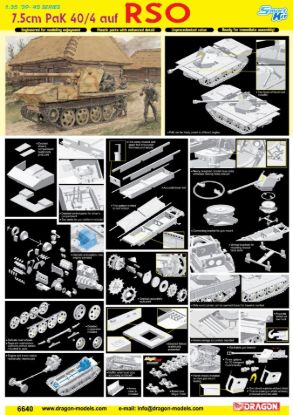
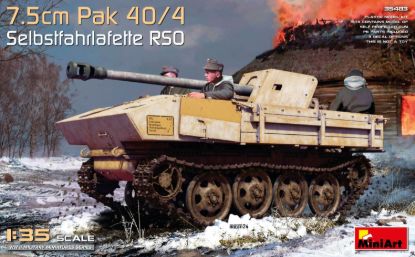
As the German army faced ever increasing numbers of Allied armour, more ways were found to place anti-tank weaponry on already existing chassis, in order to try and counter the Allied numerical superiority. The Raupenschlepper Ost (RSO) was no exception to the armed conversions that were built upon so many German vehicles at the time. The decision was made in 1943 to take the well proven battle tractor and place a Pak 40/4 on its back, in order to provide more mobile anti-tank capabilities on the front line.
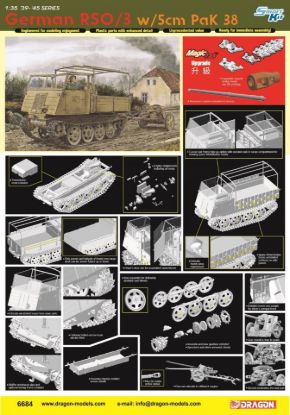
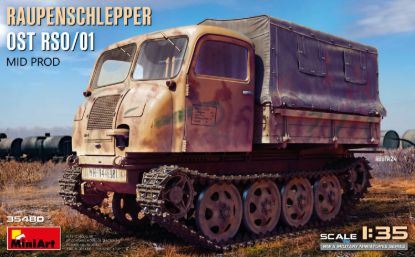
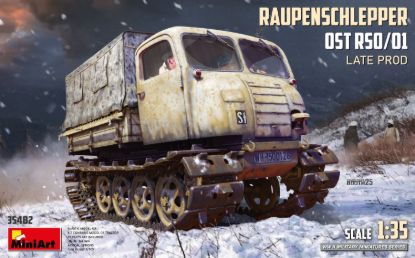
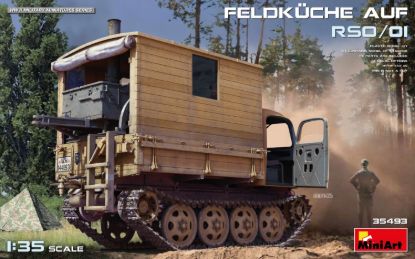
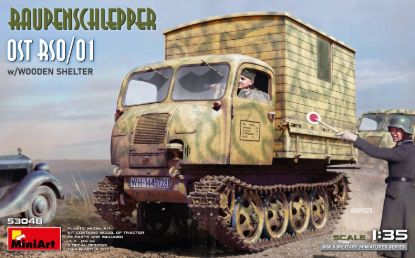
The Raupenschlepper Ost (RSO) was a fully tracked, lightweight vehicle developed by Germany during World War II. It was designed to address the mobility challenges faced by wheeled and half-tracked vehicles in the mud and snow of the Eastern Front. The RSO was a simple, robust, and lightweight tractor primarily used to tow light to medium artillery and for general transport of supplies and personnel. Its all-steel tracks and high ground clearance provided superior mobility in challenging terrain, making it an indispensable workhorse for German logistics in the East from 1942 until the end of the war.
The Raupenschlepper Ost (RSO) was a fully tracked, lightweight vehicle developed by Germany during World War II. It was designed to address the mobility challenges faced by wheeled and half-tracked vehicles in the mud and snow of the Eastern Front. The RSO was a simple, robust, and lightweight tractor primarily used to tow light to medium artillery and for general transport of supplies and personnel. Its all-steel tracks and high ground clearance provided superior mobility in challenging terrain, making it an indispensable workhorse for German logistics in the East from 1942 until the end of the war.
The Raupenschlepper Ost (RSO) was a fully tracked, lightweight vehicle developed by Germany during World War II. It was designed to address the mobility challenges faced by wheeled and half-tracked vehicles in the mud and snow of the Eastern Front. The RSO was a simple, robust, and lightweight tractor primarily used to tow light to medium artillery and for general transport of supplies and personnel. Its all-steel tracks and high ground clearance provided superior mobility in challenging terrain, making it an indispensable workhorse for German logistics in the East from 1942 until the end of the war.
The Raupenschlepper Ost (RSO) was a fully tracked, lightweight vehicle developed by Germany during World War II. It was designed to address the mobility challenges faced by wheeled and half-tracked vehicles in the mud and snow of the Eastern Front. The RSO was a simple, robust, and lightweight tractor primarily used to tow light to medium artillery and for general transport of supplies and personnel. Its all-steel tracks and high ground clearance provided superior mobility in challenging terrain, making it an indispensable workhorse for German logistics in the East from 1942 until the end of the war.
The Raupenschlepper Ost (RSO) was a fully tracked, lightweight vehicle developed by Germany during World War II. It was designed to address the mobility challenges faced by wheeled and half-tracked vehicles in the mud and snow of the Eastern Front. The RSO was a simple, robust, and lightweight tractor primarily used to tow light to medium artillery and for general transport of supplies and personnel. Its all-steel tracks and high ground clearance provided superior mobility in challenging terrain, making it an indispensable workhorse for German logistics in the East from 1942 until the end of the war.