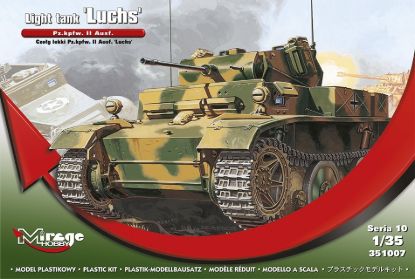
The Panzerkampfwagen II Ausf. L "Luchs" (German for lynx) is a German light tank from the Second World War, developed between 1940 and 1942 by Daimler-Benz and MAN. The Luchs was the only Panzer II design with the Schachtellaufwerk overlapping/interleaved road wheels and "slack track" configuration to enter series production, with 100 being built from September 1943 to January 1944 in addition to the conversion of the four Ausf. M tanks. Originally given the experimental designation VK 13.03, it was adopted under the alternate name Panzerspähwagen II and given the popular name Luchs.
The Panzerkampfwagen II Ausf. L "Luchs" (German for lynx) is a German light tank from the Second World War, developed between 1940 and 1942 by Daimler-Benz and MAN. The Luchs was the only Panzer II design with the Schachtellaufwerk overlapping/interleaved road wheels and "slack track" configuration to enter series production, with 100 being built from September 1943 to January 1944 in addition to the conversion of the four Ausf. M tanks. Originally given the experimental designation VK 13.03, it was adopted under the alternate name Panzerspähwagen II and given the popular name Luchs.
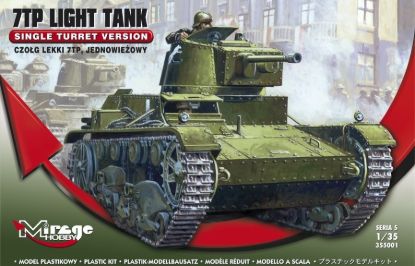
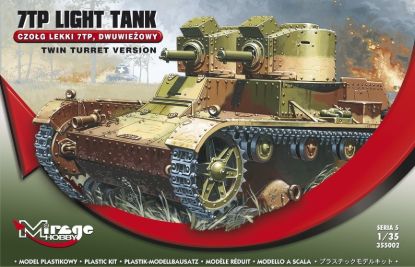
The 7TP (siedmiotonowy polski, lit. 'Polish 7-tonne') was a Polish light tank of the Second World War. It was developed from the British Vickers 6-ton. A standard tank of the Polish Army during the 1939 Polish Campaign, its production did not exceed 150 vehicles. Its chassis was used as the base for the C7P artillery tractor.
The 7TP (siedmiotonowy polski, lit. 'Polish 7-tonne') was a Polish light tank of the Second World War. It was developed from the British Vickers 6-ton. A standard tank of the Polish Army during the 1939 Polish Campaign, its production did not exceed 150 vehicles. Its chassis was used as the base for the C7P artillery tractor.
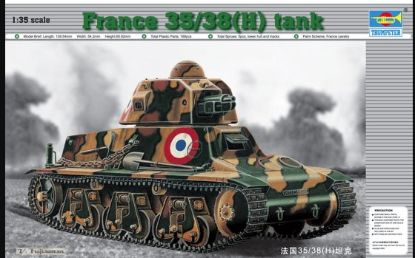
The Hotchkiss H35 was a French light tank developed in the early 1930s as part of the French Army's modernization efforts. It was designed to support infantry units and was initially rejected by the French Infantry due to its difficulty in steering across bumpy terrain. Instead, it was adopted by the French Cavalry.
The Hotchkiss H35 was a French light tank developed in the early 1930s as part of the French Army's modernization efforts. It was designed to support infantry units and was initially rejected by the French Infantry due to its difficulty in steering across bumpy terrain. Instead, it was adopted by the French Cavalry.

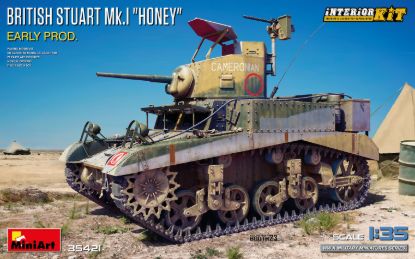
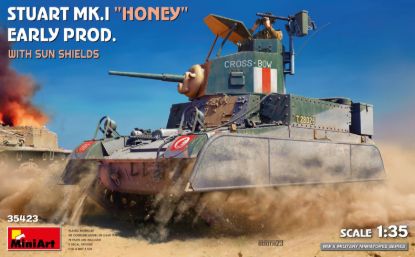
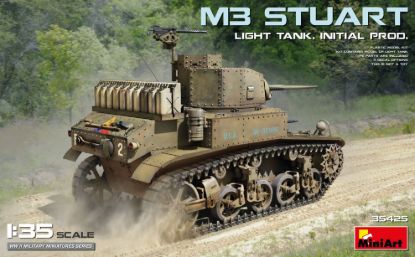
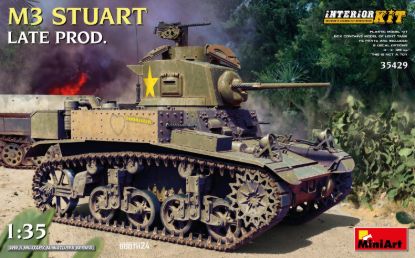
![Picture of Vickers-ARMSTRONG VA mk F/45 Light Tank [late single turret version with a 45 Psv.K/38 tank-gun]](https://www.afvhobbyhub.com/images/thumbs/0023115_vickers-armstrong-va-mk-f45-light-tank-late-single-turret-version-with-a-45-psvk38-tank-gun_415.jpeg "Show details for Vickers-ARMSTRONG VA mk F/45 Light Tank [late single turret version with a 45 Psv.K/38 tank-gun]")