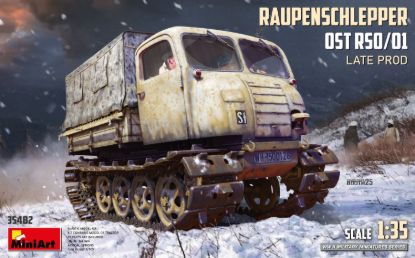
The Raupenschlepper Ost (RSO) was a fully tracked, lightweight vehicle developed by Germany during World War II. It was designed to address the mobility challenges faced by wheeled and half-tracked vehicles in the mud and snow of the Eastern Front. The RSO was a simple, robust, and lightweight tractor primarily used to tow light to medium artillery and for general transport of supplies and personnel. Its all-steel tracks and high ground clearance provided superior mobility in challenging terrain, making it an indispensable workhorse for German logistics in the East from 1942 until the end of the war.
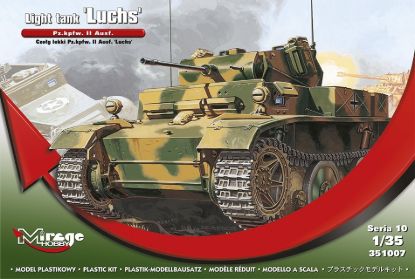
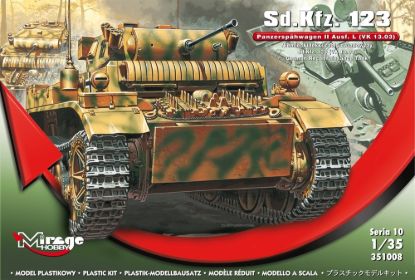
The Panzerkampfwagen II Ausf. L "Luchs" (German for lynx) is a German light tank from the Second World War, developed between 1940 and 1942 by Daimler-Benz and MAN. The Luchs was the only Panzer II design with the Schachtellaufwerk overlapping/interleaved road wheels and "slack track" configuration to enter series production, with 100 being built from September 1943 to January 1944 in addition to the conversion of the four Ausf. M tanks. Originally given the experimental designation VK 13.03, it was adopted under the alternate name Panzerspähwagen II and given the popular name Luchs.
The Panzerkampfwagen II Ausf. L "Luchs" (German for lynx) is a German light tank from the Second World War, developed between 1940 and 1942 by Daimler-Benz and MAN. The Luchs was the only Panzer II design with the Schachtellaufwerk overlapping/interleaved road wheels and "slack track" configuration to enter series production, with 100 being built from September 1943 to January 1944 in addition to the conversion of the four Ausf. M tanks. Originally given the experimental designation VK 13.03, it was adopted under the alternate name Panzerspähwagen II and given the popular name Luchs.
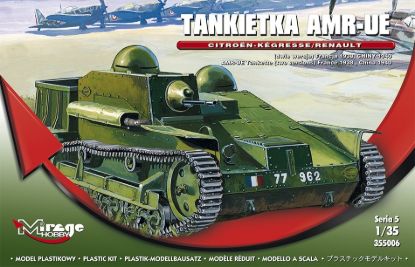
The Renault UE(f) Munitionsschlepper played a crucial role in the military operations of both France and Germany during World War II, showcasing the versatility and adaptability of military vehicles in the face of changing battlefield conditions.
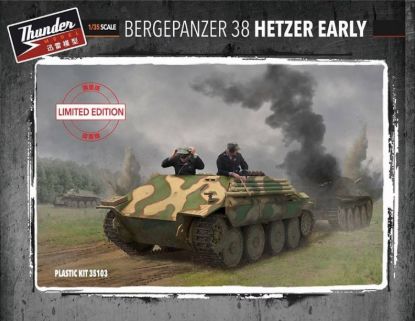
The light recovery vehicle Bergepanzer 38 or Bergepanzerwagen 38 was based on the German Jagdpanzer 38, the Hetzer tank destroyer. This light recovery vehicle, German designation Sd.Kfz. 136, was used with the Jagdpanzer units and helped repair the tank destroyers, it was capable of towing or pulling the Hetzer tanks if broken down or stuck. Between 170 to 181 were built from August 1944 until the end of the war. It used a Fug 5 radio set and was armed with a MG 34.