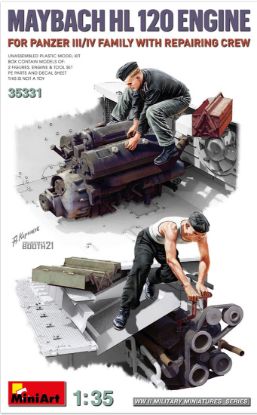
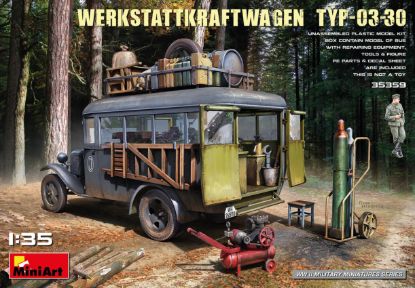
In order to rationalise Germany's military vehicle production, sweeping changes were made to its entire automotive industry. The re-organisation was overseen by Oberbaurat Heinrich Ernst Kniepkamp, head of Wa.Prüf. 6 of the Heereswaffenamt (HWA). By late October 1935, Maybach had been designated the sole designer and manufacturer of tank and half-track engines for the entire Wehrmacht.
The GAZ AA truck played a crucial role in the Soviet military during the 1930s and World War II. It was the backbone of Soviet civilian and military logistics, serving in both army and national economy.
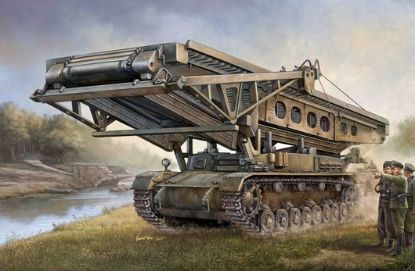
The Bruckenleger IV b was a bridge-layer mounted on the hull of the Panzer IV Ausf. D, with a total of twenty units built. These vehicles were supplied to the BL Zug (Bridging Platoon) of the 1st, 2nd, 3rd, 5th, and 10th Panzer Divisions, serving in France and the Low Countries before being withdrawn in mid-1941. The Bruckenleger IV b was known for its role in overcoming obstacles during combat, but its service with the troops was not rated well, leading to the decision to cancel further production and convert existing platforms back to conventional tanks.