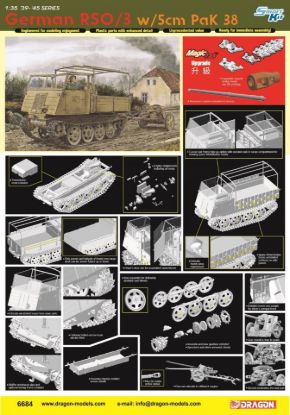
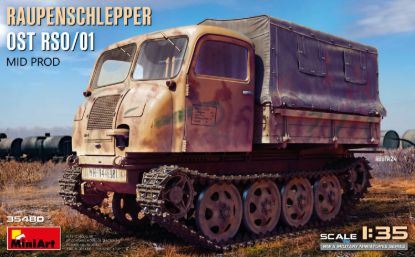
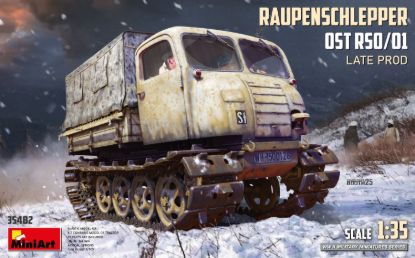
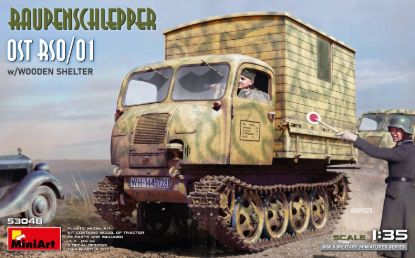
The Raupenschlepper Ost (RSO) was a fully tracked, lightweight vehicle developed by Germany during World War II. It was designed to address the mobility challenges faced by wheeled and half-tracked vehicles in the mud and snow of the Eastern Front. The RSO was a simple, robust, and lightweight tractor primarily used to tow light to medium artillery and for general transport of supplies and personnel. Its all-steel tracks and high ground clearance provided superior mobility in challenging terrain, making it an indispensable workhorse for German logistics in the East from 1942 until the end of the war.
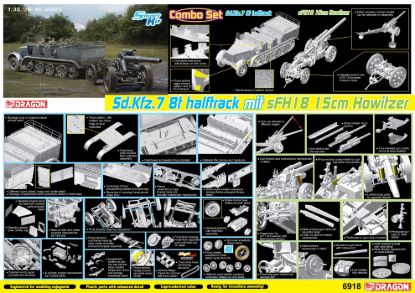
The Sd.Kfz. 7 was a half-track military vehicle used by the German Army, Luftwaffe and Waffen-SS during the Second World War. Sd.Kfz. is an abbreviation of the German word Sonderkraftfahrzeug, "special purpose vehicle". A longer designation is mittlerer Zugkraftwagen 8t, Sd.Kfz. 7, "medium towing motor vehicle 8t".
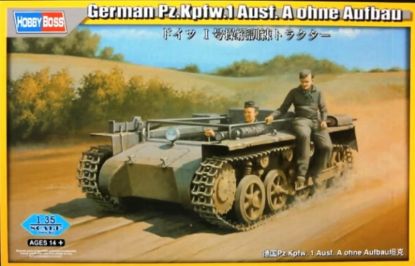
The Sd.Kfz.111, also known as the gepanzerte Munitionsschlepper, was a military vehicle used by Nazi Germany during World War II. It was primarily based on the chassis of the Panzerkampfwagen I M.G. Sd. Kfz. 101 Ausf. A and was designed to transport ammunition. The vehicle was created by removing the turret and adding a simple open-topped box body. It was intended for units equipped with the 7.62 cm Pak 36 (r) ammunition. The Sd.Kfz.111 was converted from 50 vehicles, with additional contracts for conversion reported by DEW, leading to a total of 122 vehicles converted by the end of the war.
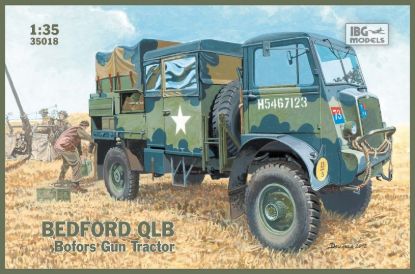
QLB Bofors gun tractor. Approximately 5,500 QLBs were built. Several QLBs were fitted with shortened GS bodies and recovery cranes to be used as wreckers by the Danish Army (Used until late 1960s).
The Raupenschlepper Ost (RSO) was a fully tracked, lightweight vehicle developed by Germany during World War II. It was designed to address the mobility challenges faced by wheeled and half-tracked vehicles in the mud and snow of the Eastern Front. The RSO was a simple, robust, and lightweight tractor primarily used to tow light to medium artillery and for general transport of supplies and personnel. Its all-steel tracks and high ground clearance provided superior mobility in challenging terrain, making it an indispensable workhorse for German logistics in the East from 1942 until the end of the war.
The Raupenschlepper Ost (RSO) was a fully tracked, lightweight vehicle developed by Germany during World War II. It was designed to address the mobility challenges faced by wheeled and half-tracked vehicles in the mud and snow of the Eastern Front. The RSO was a simple, robust, and lightweight tractor primarily used to tow light to medium artillery and for general transport of supplies and personnel. Its all-steel tracks and high ground clearance provided superior mobility in challenging terrain, making it an indispensable workhorse for German logistics in the East from 1942 until the end of the war.
The Raupenschlepper Ost (RSO) was a fully tracked, lightweight vehicle developed by Germany during World War II. It was designed to address the mobility challenges faced by wheeled and half-tracked vehicles in the mud and snow of the Eastern Front. The RSO was a simple, robust, and lightweight tractor primarily used to tow light to medium artillery and for general transport of supplies and personnel. Its all-steel tracks and high ground clearance provided superior mobility in challenging terrain, making it an indispensable workhorse for German logistics in the East from 1942 until the end of the war.
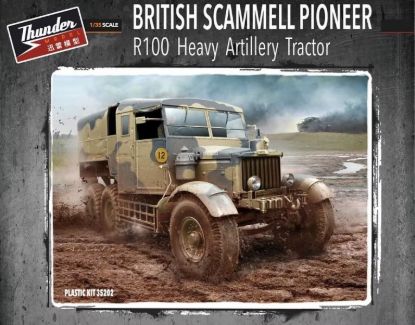
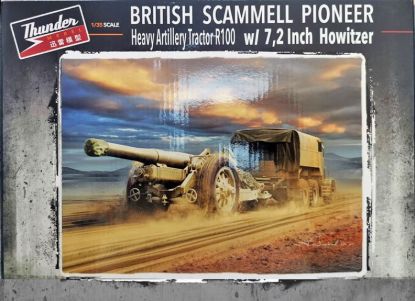
The Scammell Pioneer R100 Artillery Tractor played a crucial role in the military history of the British during World War II. It was used as an artillery tractor, recovery vehicle, and tank transporter.
The Scammell Pioneer R100 Artillery Tractor played a crucial role in the military history of the British during World War II. It was used as an artillery tractor, recovery vehicle, and tank transporter.